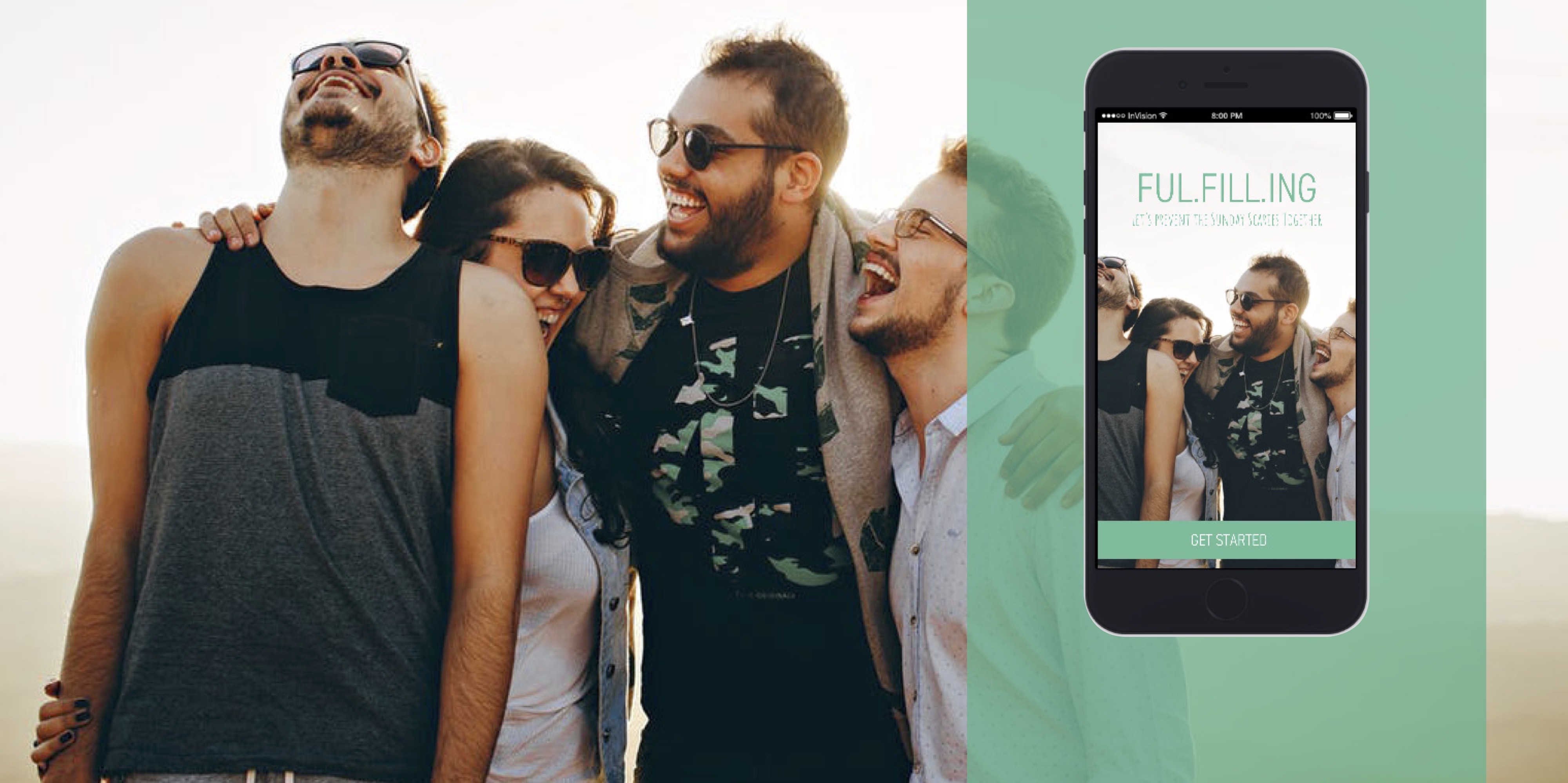
We've all experienced it. That feeling of mind-numbing dread that hits you late Sunday afternoon. That sorrow of knowing the weekend is almost over is met with the harsh reality that all responsibilities resume Monday morning.
Goal: I wanted to explore what role technology could play in mitigating the "Sunday Scaries" through observations, surveys, user-interviews, prototyping and concept testing.
My goal was to better understand if and how users were impacted by the "Sunday Scaries," and design a process aimed at mitigating these Sunday blues. Through interviews, surveys, and observations, I began to understand the nuances within this problem space.
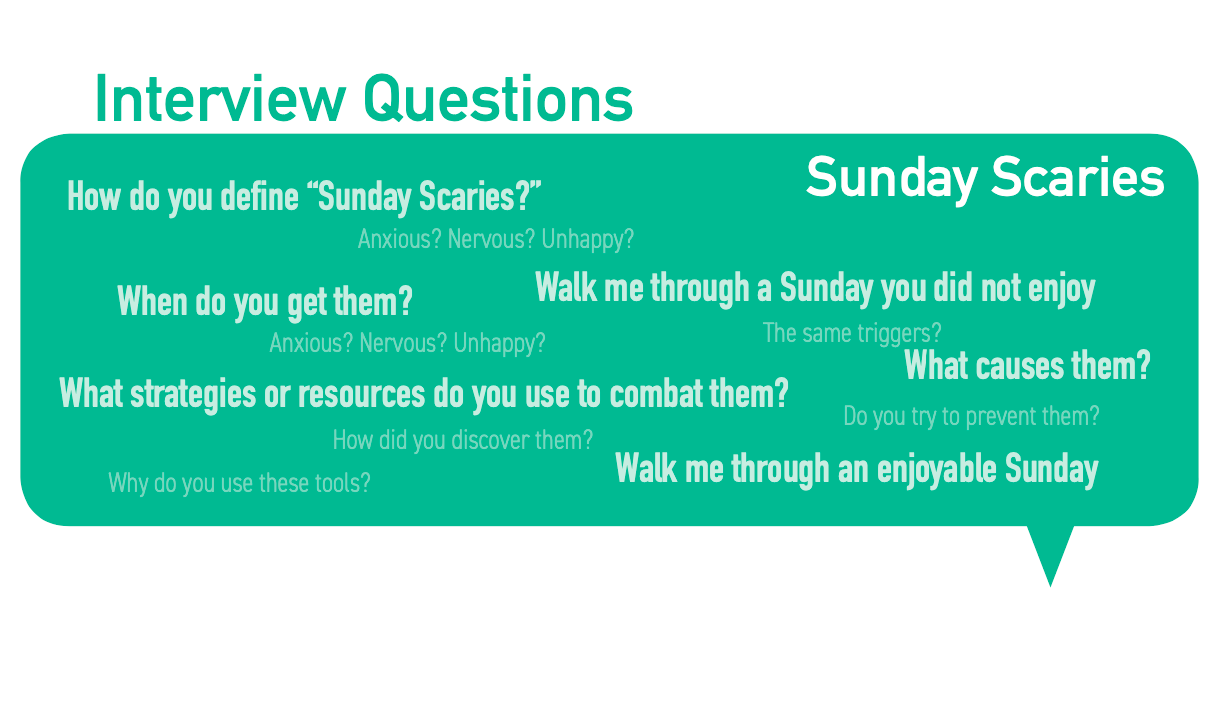
Interview and survey questions ranged from "How do you define 'Sunday Scaries'" to "Describe your favorite and least favorite Sundays." I learned the slight differences in how each person classified "Sunday Scaries" and the role productivity and expectation setting ultimately had on Sunday moods.
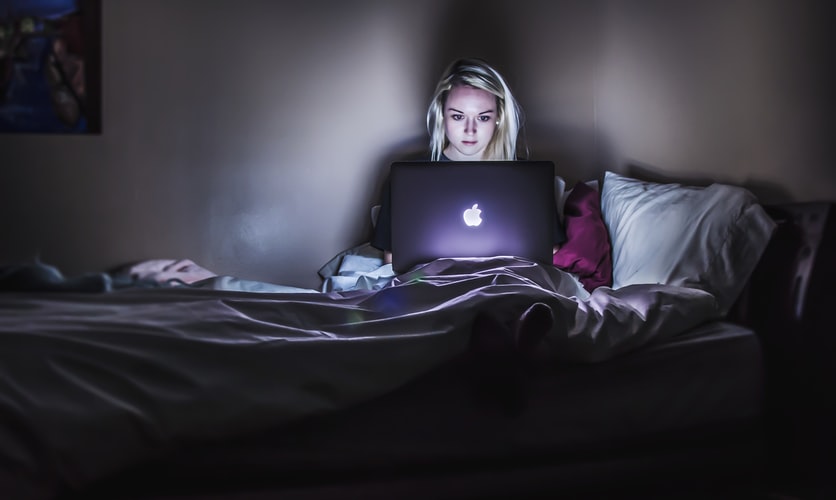
I asked a few participants to keep a log of their weekend activities and moods, to simulate "observing them." I found interesting trends around how the make-up of their weekend activities impacted their Sunday moods. For example, those who were productive, had time for themselves, and had a social activity were much happier on Sunday evenings.

By organizing responses into clusters, I could better identify trends in user responses. When looking at responses to "When Does it Happen," it was clear that over 90% of users felt the "Sunday Scaries" in the late afternoon, around 4pm.
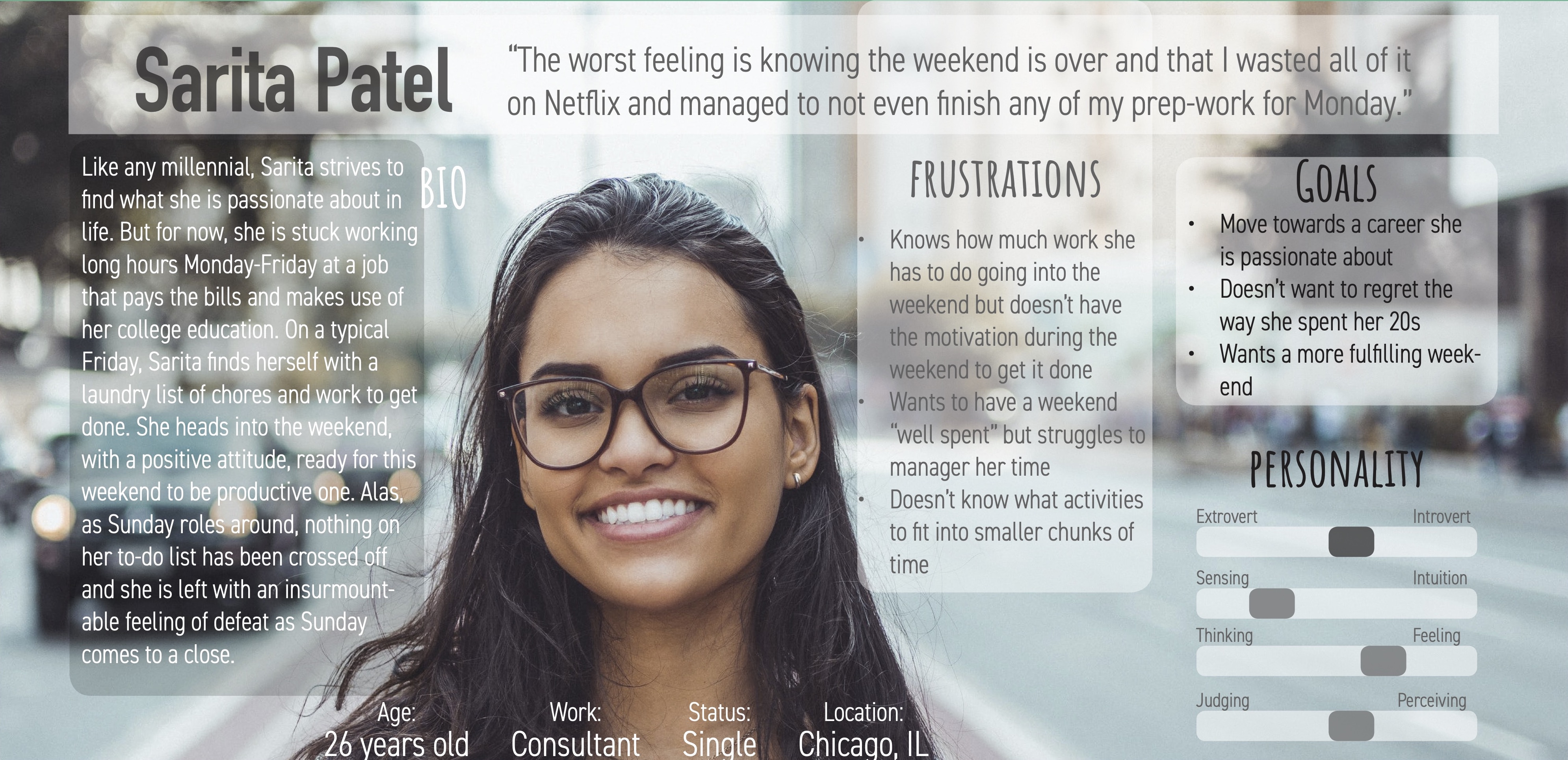
Creating an app for young adults to proactively plan and retroactively track their weekend activities and moods will help motivate young adults to make the most out of their weekends.
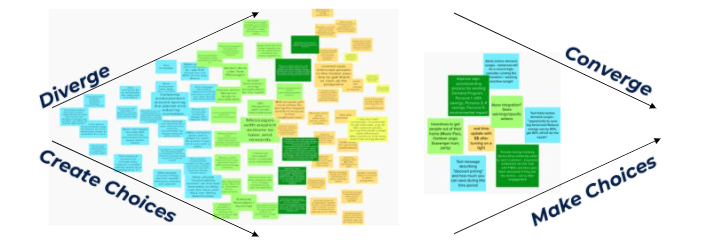
I began to brainstorm solutions that would motivate young adults to plan feasible and fulfilling weekends. I combined insights from users with feedback from experts in the mental health industry, counselors and therapists.
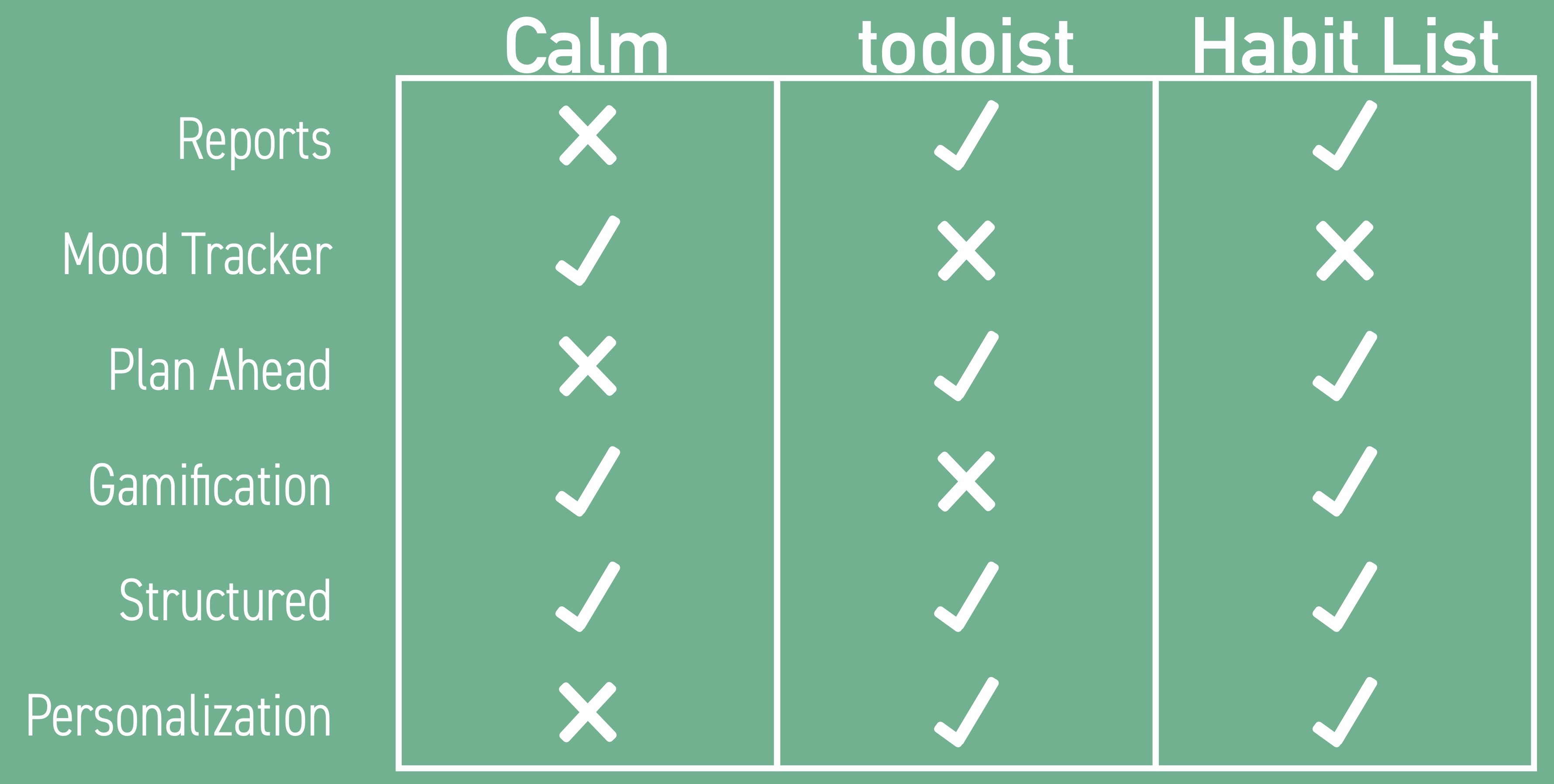
Once identifying the direction of the project, I took a high level look at competitors within this space. While there were plenty of "to-do list" type apps, there weren't any apps focused specifically on planning and monitoring longe- term weekend activities.
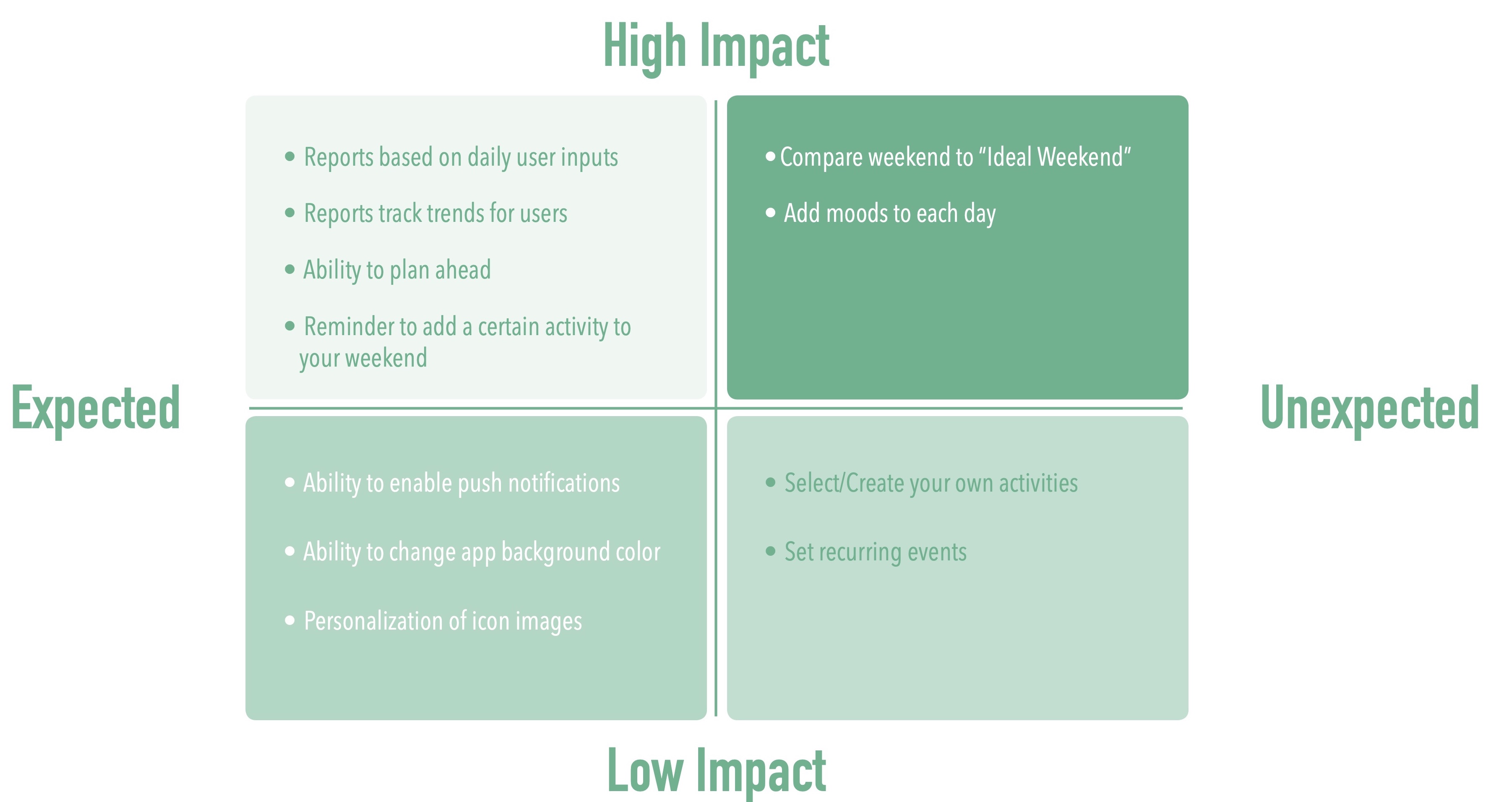
After ranking all app features based on priority and receiving user feedback, I was able to pinpoint which features my minimum viable product would target. While gamification, for example, was an element users wanted, this feature was not crucial to include within the initial concept.
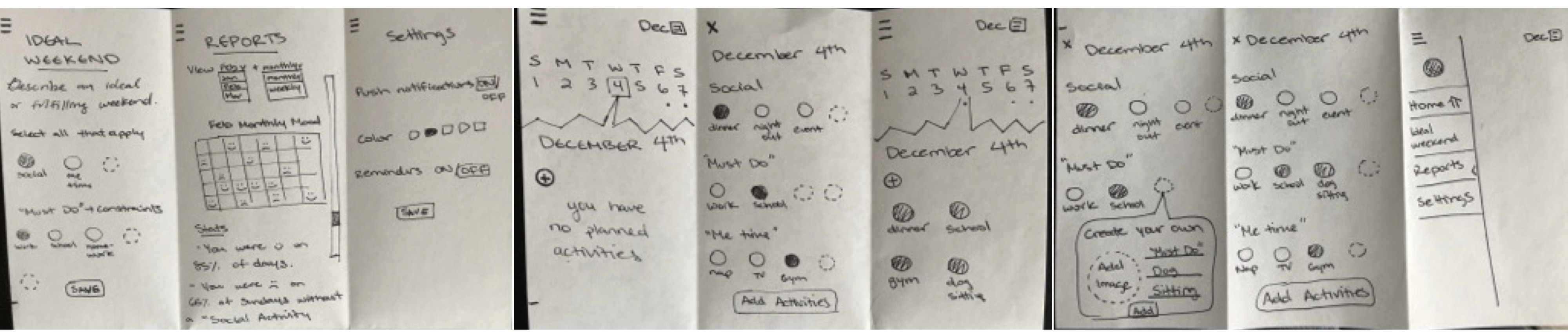
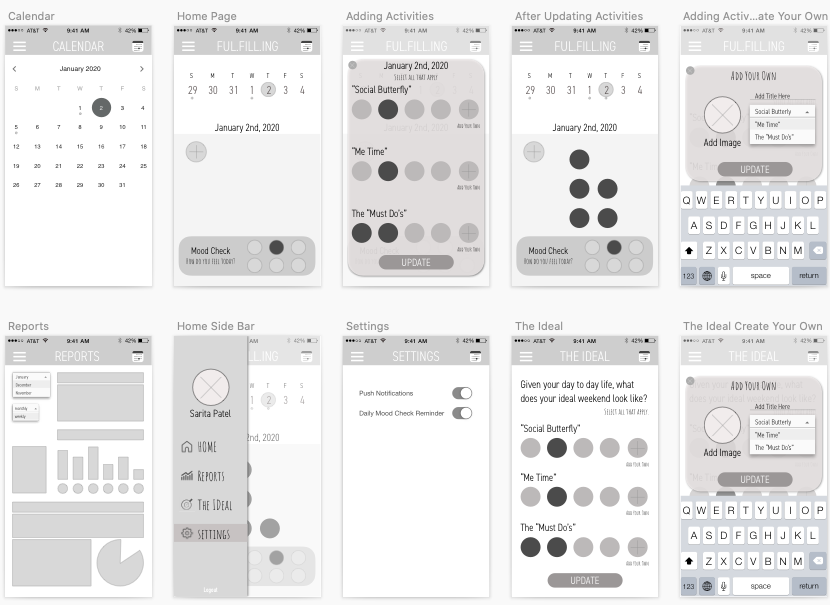
Through observing users interacting with the prototype, I made smaller stylistic changes around where icons were located and what fonts were used.
Users wanted to be prompted to fill out their ideal weekend composition prior to planning future weekends. Users also wanted space within each day to add personal notes/moods that were unrelated to activities. For example, a weekend might have had excessive "Alone time" because they were going through a break-up.
Users really enjoyed the "Reports" feature that allowed them to see how their weekend compared to their "Ideal Weekend." Users wanted the option to compete with friends and family as a motivation to finish their work and complete all activities they had planned for themselves.